

Stop thinking your body absorbs nutrients the same way it did when you were thirty. It doesn’t.
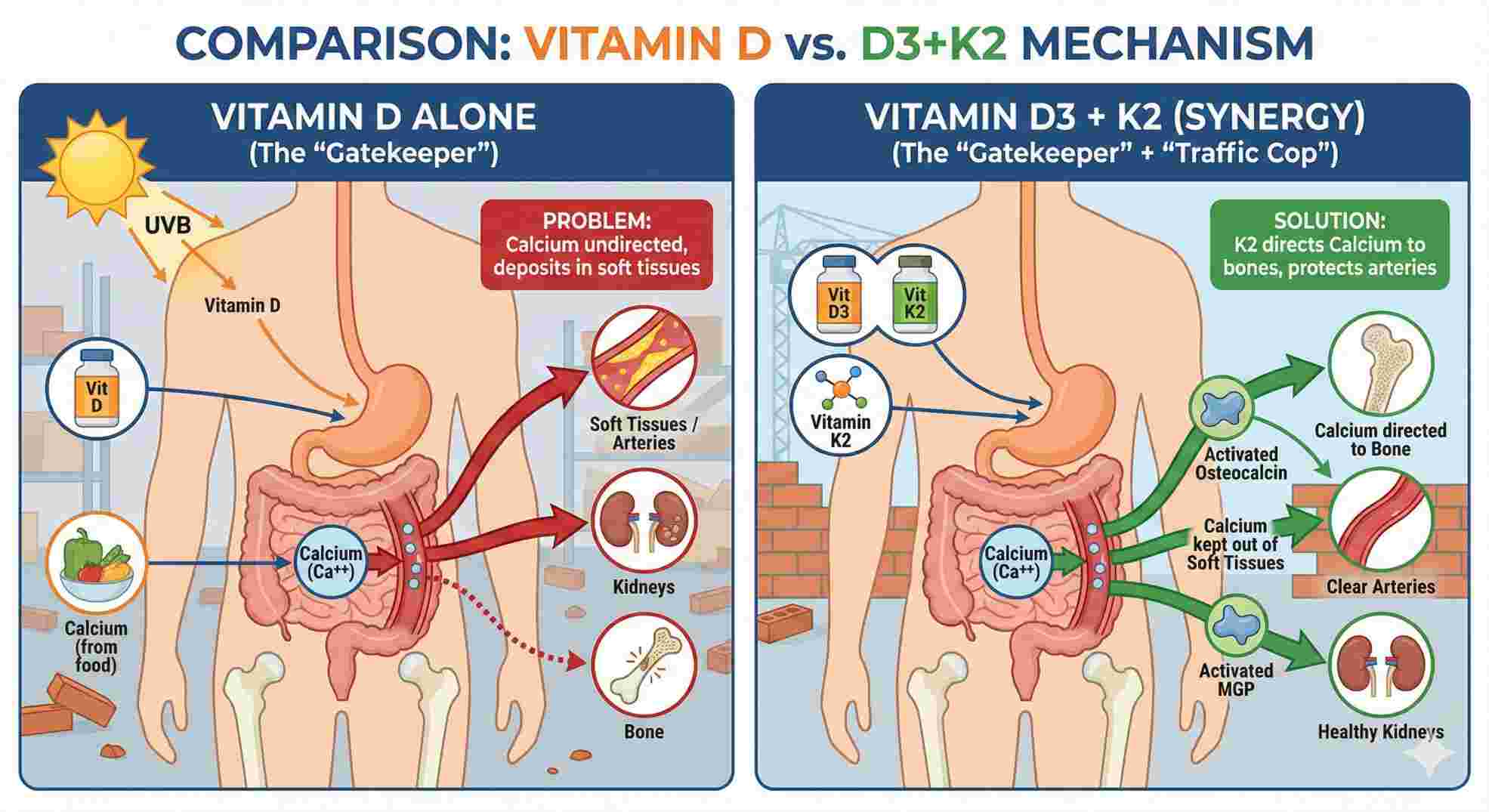
Here is a scary thought: Taking a calcium supplement by itself to prevent osteoporosis? You might actually be hurting your heart. It sounds backward, but without specific partner nutrients—namely Vitamin D3 and K2—that calcium often never makes it to your bones. It settles in your arteries instead.
If you walk down the supplement aisle and feel overwhelmed by the wall of pink bottles and the confusing hype surrounding longevity supplements, you are right to be skeptical. The rules change completely after menopause. It’s no longer about general maintenance. It’s about tactical replacement. You are facing the “Estrogen Cliff”—that sharp drop in protective hormones that messes with your bone density, brain function, and sleep quality.
We aren’t just going to list pills here. This is a strategy for fueling your body when it needs support the most.
⚡ The 30-Second Summary
- The Teamwork Rule: Never take Calcium without D3 and K2. They work together to push minerals into bone, not soft tissue.
- Absorption Beats Dosage: A huge dose of a cheap vitamin (like Magnesium Oxide) does less for you than a small dose of a high-quality one (like Magnesium Glycinate).
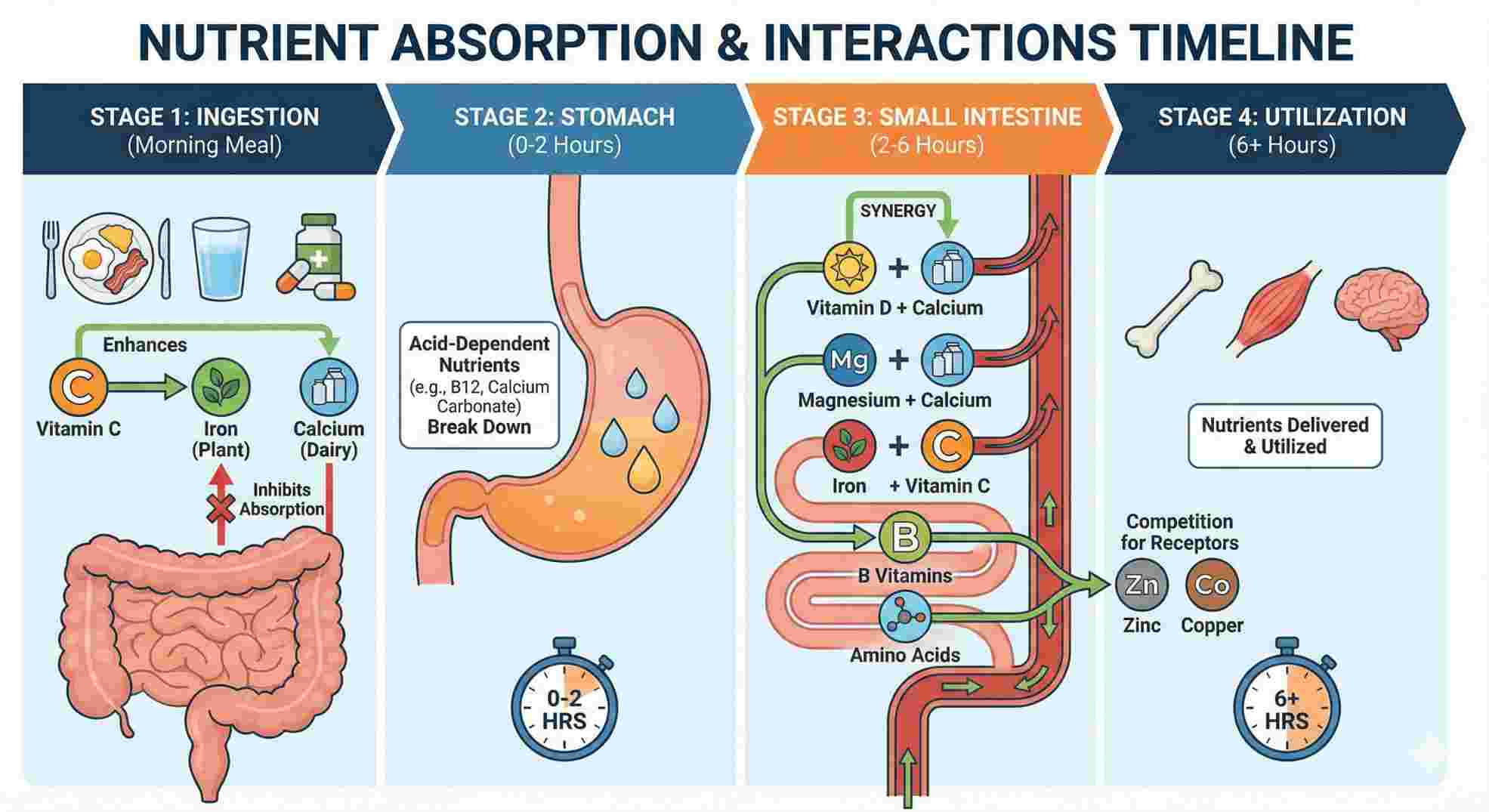
- The B12 Problem: Your stomach acid gets weaker with age, making it incredibly hard to pull B12 out of food.
- Test First: Don’t guess. Get a blood panel before you buy a multivitamin. Toxic vitamin levels are rare, but they happen.
Why Your Current Multivitamin Might Be Useless
The supplement industry hides a dirty little secret in the fine print: Bioavailability.
Most generic “Senior” multivitamins use the cheapest ingredients possible to keep their costs down. Take Vitamin B12. Check your label. Does it say Cyanocobalamin? That is a synthetic form. Your liver has to do a lot of heavy lifting to convert that into something your body can actually use.
Here is the kicker: If you have the MTHFR gene mutation (which about 40% of us do), you can’t process those synthetic forms efficiently at all. You could be swallowing a pill every morning and still be deficient.
For women over fifty, the goal isn’t just swallowing vitamins; it’s absorbing them. You need “methylated” B vitamins and “chelated” minerals. These are pre-converted forms. They skip the hard work and go straight into your system.
The “Big 4” Vitamins You Actually Need
Forget the laundry list of thirty different ingredients. Focus on these four. These are the specific deficiencies that hit women hardest after menopause.
1. Vitamin D3 + K2 (The Bone Builders)
Vitamin D isn’t really a vitamin. It’s a pro-hormone. After fifty, your skin loses its ability to generate Vitamin D from sunlight by nearly half.
- Why you need it: It controls how you absorb calcium.
- The K2 Connection: Think of Vitamin K2 as a traffic cop. It directs calcium into your bones and keeps it out of your heart valves.
- Target Level: You want your blood level between 40–60 ng/mL.
2. Vitamin B12 (The Energy Guardian)
If you are having “senior moments” or feel tired all the time, don’t just blame your age. Blame B12.
- The Problem: You need strong stomach acid to get B12 out of meat. As we get older, stomach acid gets weaker. If you take acid reflux meds, it’s even worse.
- The Fix: Look for Methylcobalamin. Get it in a liquid or a lozenge that dissolves under your tongue. This lets it go straight into your bloodstream.
3. Magnesium Glycinate (The Sleep Saver)
Magnesium handles over 300 jobs in your body. If you get leg cramps at night or feel anxious, you are likely running low.
- Avoid: Magnesium Oxide. It’s basically a laxative and your body barely absorbs it.
- Choose: Magnesium Glycinate or Malate. These are gentle on the stomach and actually work.
4. Omega-3 Fatty Acids (The Inflammation Fighter)
When estrogen drops, your natural shield against inflammation cracks. Omega-3s (specifically EPA and DHA) step in to protect your heart and brain.
- Source Matters: Algae oil or oil from small fish (like sardines) is safer than generic fish oil because there is less mercury risk.
Cheat Sheet: Trash vs. Treasure Forms
Don’t throw money away on vitamins your body just flushes out. Use this chart to check your bathroom cabinet.
| Nutrient | The “Trash” Form (Avoid) | The “Treasure” Form (Buy) | Why It Matters |
|---|---|---|---|
| Magnesium | Magnesium Oxide | Magnesium Glycinate or Citrate | Oxide causes diarrhea; Glycinate helps you sleep. |
| Vitamin B12 | Cyanocobalamin | Methylcobalamin | Methylated forms are ready for your body to use immediately. |
| Folate | Folic Acid | 5-MTHF (Methylfolate) | Synthetic folic acid can hide a B12 deficiency; MTHF is safer. |
| Calcium | Calcium Carbonate | Calcium Citrate or Algae-based | Carbonate needs stomach acid to break down; Citrate absorbs easily. |
The Menopause Midsection
You will see plenty of vitamins for women over fifty that claim to stop weight gain. Let’s be real: No pill burns fat on its own. However, missing nutrients will stall your metabolism.
When your Vitamin D is low, your body panics. It thinks it’s winter—famine time—and holds onto fat storage. Without enough B-Complex vitamins, you can’t turn food into energy efficiently. That leads to blood sugar spikes and that stubborn belly fat often called the “menopause apron.”
A Note on Thyroid Meds: If you take thyroid medication (which is common for us over 50), never take your calcium or iron supplements at the same time. They can block your medication by up to 40%. Keep them at least 4 hours apart.
Symptom Checker: Is It Aging or Deficiency?
Before you resign yourself to “just getting older,” check this list. A simple deficiency might be the culprit.
| If You Feel… | It Could Be a Lack Of… | The Fix |
|---|---|---|
| Brittle Nails & Thinning Hair | Biotin or Iron (Ferritin) | Check Ferritin levels first; too much Iron is dangerous for seniors. |
| Brain Fog | Vitamin B12 or Omega-3s | Sublingual B12 + High DHA Fish Oil. |
| Nighttime Leg Cramps | Magnesium or Potassium | 200mg Magnesium Glycinate before bed. |
| Easy Bruising | Vitamin C or K | Eat more citrus and leafy greens. |
Food vs. Supplements: The Reality
“Can’t I just eat healthy?”
It is a valid question. But the math doesn’t always add up. To hit therapeutic levels for anti-aging, the volume of food you have to eat is unrealistic.
| Nutrient Goal | Food Equivalent Required (Daily) | Verdict |
|---|---|---|
| Vitamin D3 (2,000 IU) | 50 Eggs or 4 Fillets of Salmon | Supplement Required. You can’t eat that much daily. |
| Magnesium (350 mg) | 4 Cups of Spinach or 1 Cup of Pumpkin Seeds | Hybrid. Possible with diet, but hard to keep up every day. |
| Vitamin C (500 mg) | 1 Large Red Bell Pepper or 5 Oranges | Food First. Easy to do with diet alone. |
Skip the Gummies
Gummy vitamins are everywhere, but for women over 50, they are usually a bad call.
- Sugar: Most are full of glucose syrup. That spikes inflammation—the exact thing you are trying to avoid.
- Weak Potency: Vitamins break down faster in gummy form. You likely aren’t getting what the label promises.
- Missing Minerals: Bulky minerals like Magnesium and Calcium literally don’t fit inside a gummy, so the doses are tiny.
Stick to capsules or softgels. If you hate swallowing pills, look for high-quality liquids or powders.

Your Next Move
Figuring out vitamins for women over fifty doesn’t have to be a guessing game. Stop buying the prettiest bottle on the shelf.
Here is your plan:
- Stop guessing.
- Schedule a blood panel with your doctor. Ask for Vitamin D and B12 specifically.
- Swap your Magnesium Oxide for Magnesium Glycinate.
- Pair your Calcium with Vitamin K2.
Your body is resilient. It just needs the right raw materials to rebuild.
Ready to see real changes in the mirror? Try Mitolyn risk-free for 90 days and lock in today’s special discount before it expires
Frequently Asked Questions:
Can I take too much Vitamin D?
Yes. Vitamin D is fat-soluble, meaning it stores in your body. It is rare, but toxicity can happen and it hurts your kidneys. Always test your levels (aim for 40-60 ng/mL) before you take high doses (over 4,000 IU) for a long time.
Should I take a multivitamin or separate pills?
A high-quality multivitamin is a good “insurance policy,” but it rarely gives you enough Magnesium or Vitamin D. A mix is best: take a good multi, then add a Magnesium and Vitamin D booster based on your bloodwork.
When is the best time to take them?
Morning: B-Vitamins and Multivitamins (they give you energy).
Evening: Magnesium (it helps you sleep).
With Food: Vitamin D, K, A, and E need fat to absorb. Eat them with avocado or yogurt, otherwise, they won’t work.
Do I really need “Senior” formulas?
Usually, yes. Formulas for younger women have lots of Iron for menstruation. After menopause, you need less iron, and too much can cause inflammation. Senior formulas usually take out the iron and boost the B12 and Calcium.
I eat well. Do I still need supplements?
Even with a perfect diet, our soil isn’t what it used to be, and our bodies don’t absorb as well as they used to. You would need to eat three cans of sardines every day to get enough Vitamin D. Supplements bridge the gap.