
You tell your doctor you’re tired. They check your iron, tell you to sleep more, and send you home. But if you are searching for the truth about vitamin d for women over 40, you know the difference between “had a long week” tired and the bone-deep exhaustion that sleep doesn’t fix.
For women over 40, this isn’t just about aging gracefully or “slowing down.” It’s often a sign that your body is effectively starving for a steroid hormone masquerading as a vitamin. In fact, if you are exploring Longevity Supplements: The Reality Behind the Hype, you will find that Vitamin D is almost always the very first recommendation for a reason.
Here is the brutal truth: You can drink gallons of milk and pop calcium chews until you rattle, but without adequate Vitamin D, your body won’t absorb any of it. Instead, your system acts like a desperate bank manager dealing with a robbery—leeching calcium out of your bones just to keep your heart beating and your muscles firing.
The drop in estrogen during perimenopause doesn’t just stop a monthly cycle; it actively degrades your ability to hold onto minerals. Vitamin D is the security guard that stops the heist.
Key Takeaways: The 30-Second Brief
- It’s Not Just a Vitamin: It behaves more like a hormone, flipping switches on over 3,000 genes.
- The “Calcium Paradox”: Taking D3 without K2 is a rookie mistake that can actually hurt your arteries (we’ll explain why).
- The Sweet Spot: The old “600 IU” rule is outdated. You likely need much more to see a real change.
- Men Need It Too: It’s not just a “woman’s vitamin.” Men over 40 rely on it for testosterone and heart health.
Why Taking D3 Alone is a Mistake
Most generic health advice tells women over 40 to “take Calcium and Vitamin D” and leaves it at that.
That advice is incomplete, and frankly, a bit dangerous.
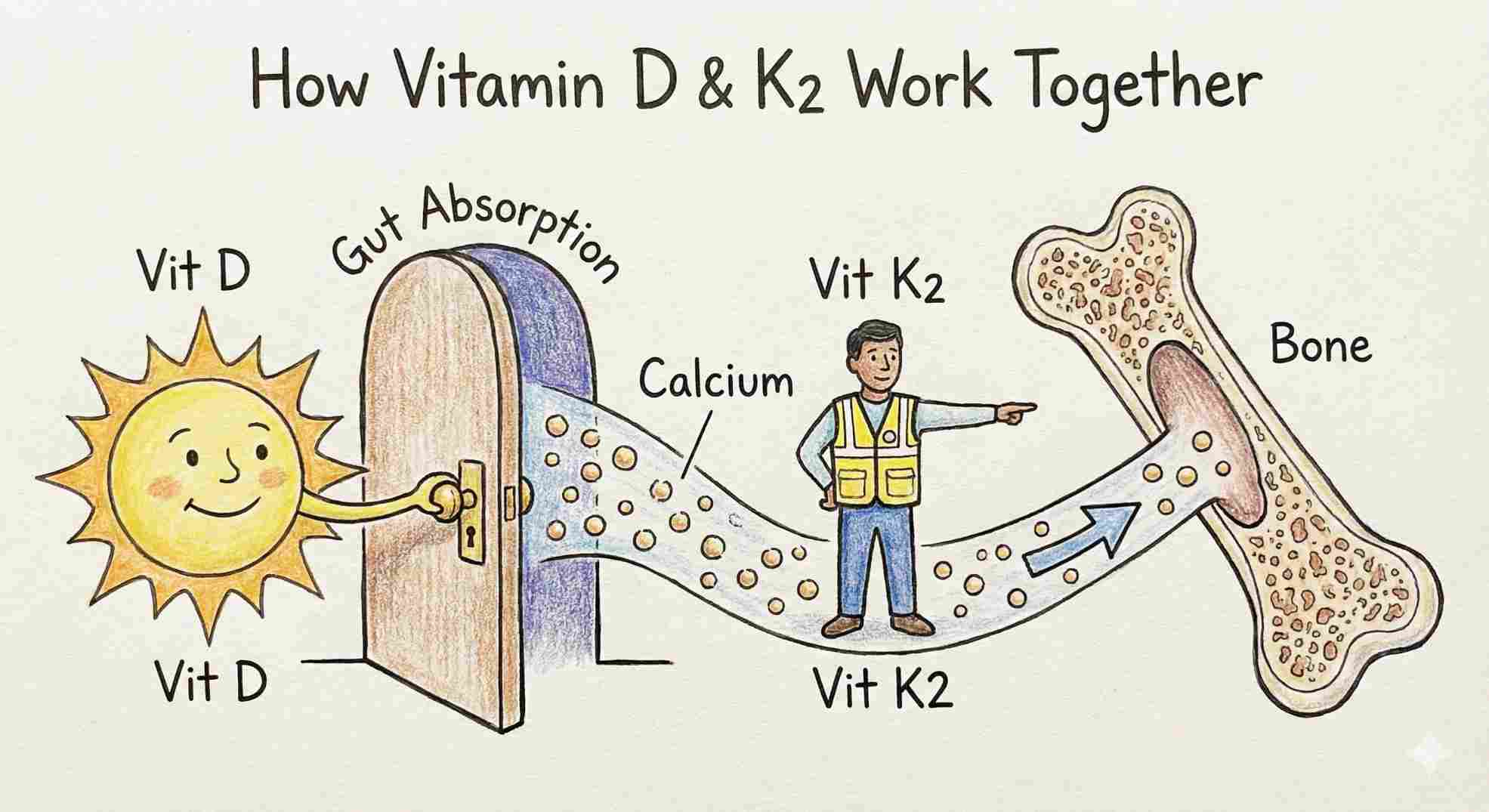
Vitamin D3 is great at one specific job: it opens the door so calcium can get into your bloodstream. But once that calcium is inside, D3 stops working. It doesn’t tell the calcium where to go.
Without a traffic director, that newly absorbed calcium can end up in places you definitely don’t want it—like clogging up your arteries or forming kidney stones—instead of strengthening your bones.
You need Vitamin K2.
Think of D3 as the gatekeeper who lets calcium into the building. Vitamin K2 is the guide who physically grabs that calcium and shoves it into the bone matrix where it belongs.
If you are worried about osteoporosis or arterial calcification, never take one without the other. Look for a supplement that pairs Vitamin D3 with K2 (specifically MK-7).
How Much Do You Actually Need?
The standard recommended daily allowance (RDA) established by the NIH is often years behind the actual science. While government guidelines might suggest 600 IU, most functional medicine doctors agree that amount is barely enough to keep you alive, let alone feeling good.
If you want to actually fix your energy levels and protect your bones, you need to look at therapeutic dosing.
Real World Dosage Guide
| Goal | Daily Dosage (IU) | Target Blood Level (ng/mL) | The Reality |
|---|---|---|---|
| Maintenance | 1,000 – 2,000 IU | 30 – 40 ng/mL | Fine if you live in Florida and spend all day outside. |
| Therapeutic | 4,000 – 5,000 IU | 40 – 60 ng/mL | The sweet spot for most women over 40. |
| Deficiency Repair | 5,000+ IU (Short term) | < 30 ng/mL (Starting) | Talk to a doctor first. You don’t want to overdo it without testing. |
Note: Don’t guess. Order a simple 25-Hydroxy Vitamin D blood test. It’s the only way to know if you are taking enough.
Stop Buying the Wrong Pills
Not all supplements survive your stomach acid. As we get older, our digestion slows down, meaning we absorb less from what we eat. If you are swallowing a hard, chalky tablet, you might just be making expensive urine.
Liquid vs. Pills: What Wins?
| Form | Absorption | Best For… | Verdict |
|---|---|---|---|
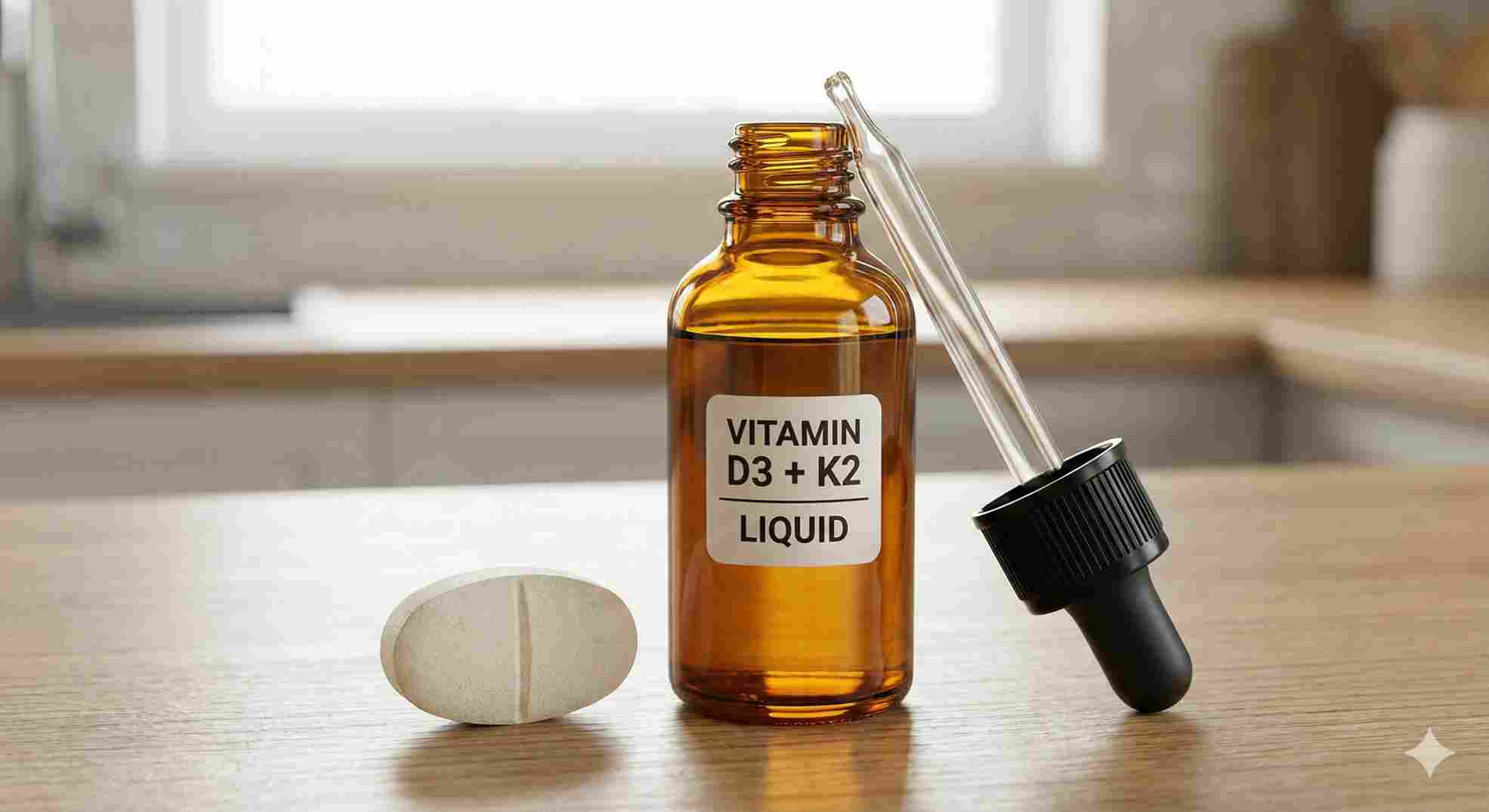
| Liposomal/Liquid D3 | Highest | Anyone with sensitive stomachs or gut issues. | The Winner. It skips digestion and gets right to work. |
| Softgel (with Oil) | High | Daily maintenance. | Great choice, just make sure it uses olive oil or MCT, not cheap soybean oil. |
| Dry Tablet | Low | Saving money (barely). | Skip it. Hard to break down and absorb. |
| Gummies | Variable | People who hate swallowing pills. | Be careful. They are often loaded with sugar and weird fillers. |
What About the Men?
Since we are talking about household health, the question usually comes up: should men take vitamin d?
Yes, and not just for their bones.
For men over 40, Vitamin D is basically a natural performance enhancer.
- Testosterone: It’s a building block for male hormones. Research shows a clear link: low Vitamin D often means low testosterone.
- Blood Flow: It helps keep the lining of your blood vessels flexible. Deficiency is a known risk factor for erectile dysfunction because if your blood vessels are stiff, flow is restricted everywhere.
Bottom line: Men over 40 need it too, though they usually need slightly less than post-menopausal women unless they are carrying significant extra weight.
The Final Word
Treating Vitamin D as “just another supplement” is a missed opportunity. For women over 40, it is a legitimate strategy to outsmart the hormonal shifts trying to slow you down.
Your Action Plan:
- Get Tested: Know your number.
- Upgrade: Switch to a Liquid D3 + K2 formula.
- Routine: Take it every morning with some healthy fat.
Don’t settle for feeling “normal for your age.” You deserve to feel fully alive.


Ready to see real changes in the mirror? Try Mitolyn risk-free for 90 days and lock in today’s special discount before it expires
Frequently Asked Questions:
Can this really help with menopause mood swings?
It helps. Vitamin D is involved in making serotonin—the “happy chemical” in your brain. While it won’t fix everything overnight, correcting a deficiency can lift that heavy, unexplained fog and stabilize your mood.
D2 or D3? Does it matter?
It matters a lot. Always buy Vitamin D3 (Cholecalciferol). That’s what your body makes naturally. D2 is plant-based, harder for your body to use, and doesn’t last as long in your system.
When should I take it?
Morning is best. Take it with breakfast, specifically something with fat like eggs, avocado, or yogurt. Vitamin D can mess with your melatonin (sleep hormone), so taking it right before bed might keep you awake.
How long until I feel better?
It’s a slow build, not an overnight fix. It usually takes 3 to 6 months of consistent use to move your levels from the danger zone to the optimal zone.