

Most of us were taught that a metabolism should work like a high-end car engine—perfectly efficient, squeezing every bit of power from every drop of fuel. But looking at the latest longevity research, that’s actually the wrong way to think about it. In fact, being too efficient might be exactly what’s wearing your body out from the inside, which is why understanding the biological process of mitochondrial uncoupling is becoming the new frontier in metabolic health.
When your mitochondria—those tiny power plants in your cells—are running at 100% efficiency, they produce a massive amount of “cellular exhaust” called free radicals. This metabolic smoke causes inflammation, damages your DNA, and is a major driver of how fast we age. According to research archived on PubMed, this oxidative stress is at the core of most age-related decline.
This is where mitochondrial uncoupling comes in.
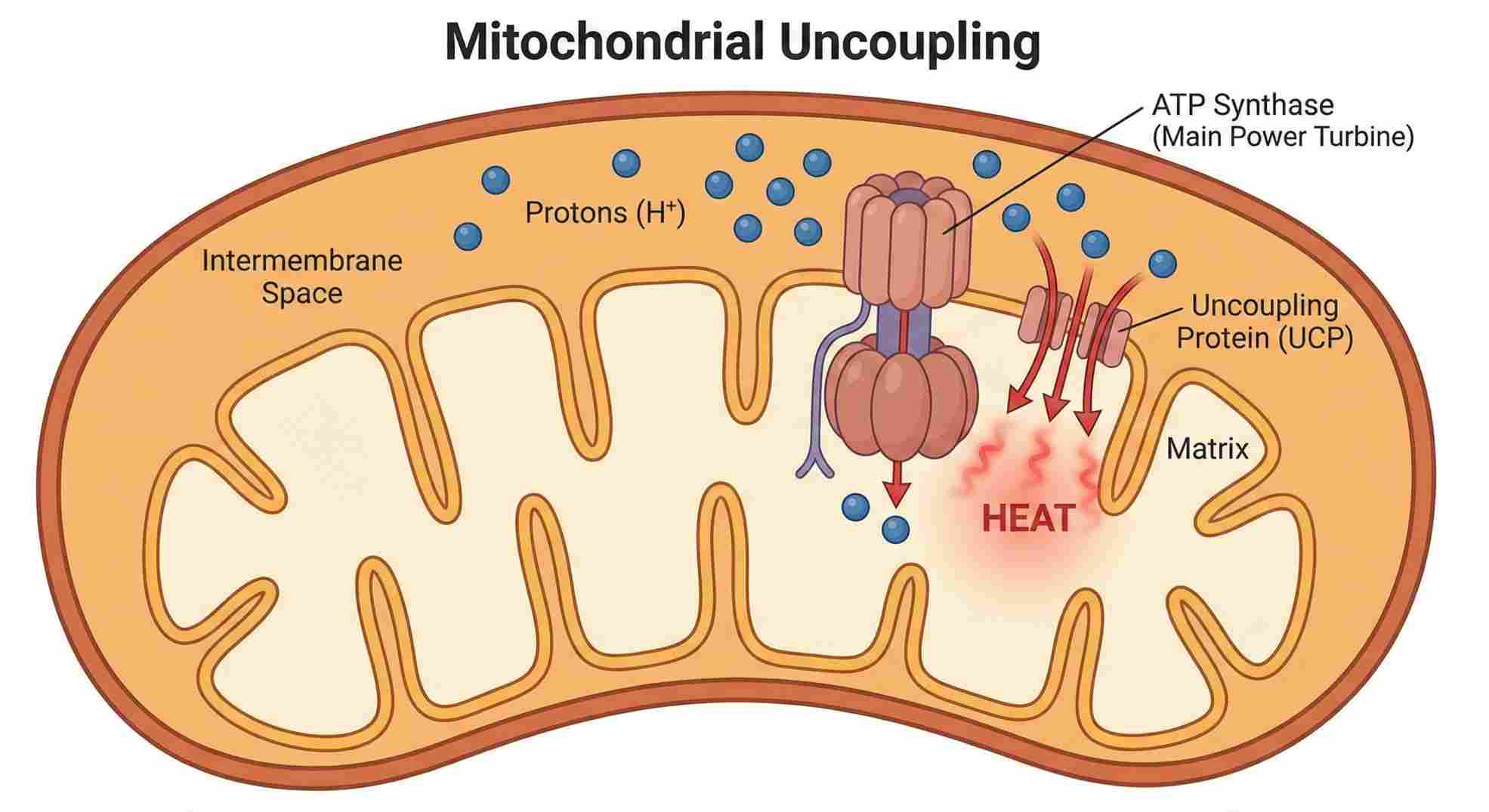
Think of it as a pressure relief valve. By allowing some energy to “leak” out as heat instead of being turned into fuel, your body stops the buildup of toxic byproducts. It’s a biological shortcut that cleans up your cellular machinery while naturally revving up your internal furnace. While uncoupling is a specific mechanical process, it works best when your cellular engines are well-supported. For a broader look at total cell optimization, check out our Ultimate Guide to Mitochondria Supplements to see how nutrients fuel these processes.
Key Takeaways for Cellular Health
- The Pressure Valve: Uncoupling lets protons skip the line, preventing cellular “overheating” and DNA damage.
- Burn for Heat: Instead of storing every calorie as fat, uncoupling turns that energy into body heat.
- Smart Stress: You can trigger this process yourself using specific foods and temperature changes.
- Age Slower: People with naturally higher uncoupling rates tend to have better blood sugar levels and longer lifespans.
The Hidden Trap of Metabolic Efficiency
Here is something your average gym trainer won’t tell you: an “inefficient” cell is often a much cleaner one. When you eat more than your body needs to move, your mitochondria get backed up. Protons start piling up like a traffic jam. When that pressure gets too high, the system starts “sparking.” Those sparks are the free radicals that lead to chronic disease.
Uncoupling is the way your body handles that traffic jam. It opens a side door, letting those protons flow back through the membrane without causing a wreck. You aren’t “wasting” energy; you’re saving the engine. This is why some people seem to eat whatever they want without gaining a pound—their bodies are masters at uncoupling and burning off the excess as pure heat. Studies published in Nature highlight how this mechanism is a cornerstone of metabolic resilience.
The Secret Sauce: Brown Fat and UCP1
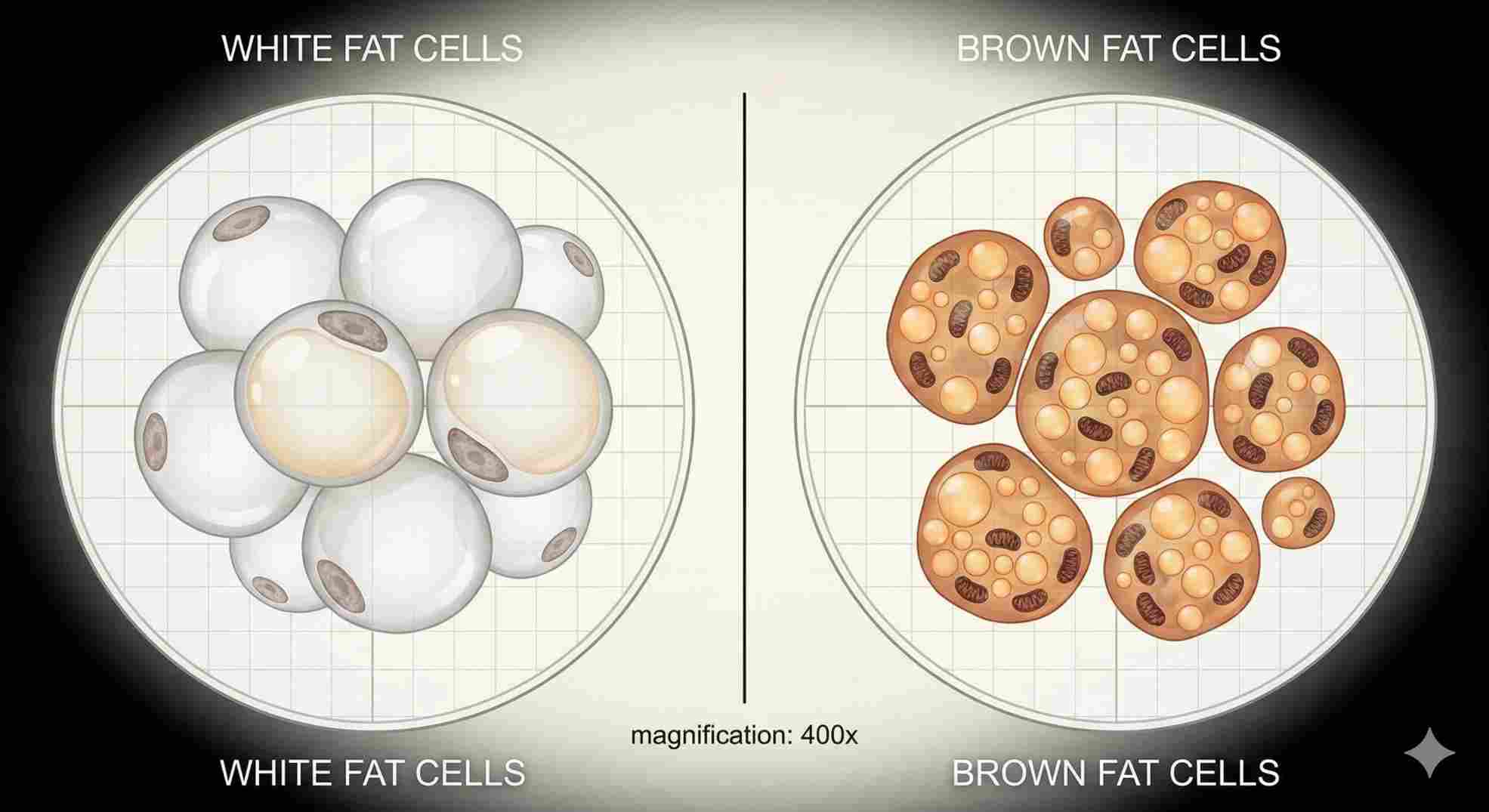
To get more out of this, we have to look at “Brown Fat.” Unlike the white fat that sits around our waist, brown fat is loaded with mitochondria and a specific protein called UCP1. Its only job is to uncouple and keep you warm.
Table 1: Energy Storage vs. Energy Burning
| Feature | Standard Energy Production | Mitochondrial Uncoupling |
|---|---|---|
| End Result | Stores energy (ATP) | Creates heat |
| The Pathway | The main “turbine” | The “side door” (UCP) |
| Metabolic Impact | Highly efficient / Slow burn | High turnover / Fast burn |
| Cellular Wear & Tear | Higher (More free radicals) | Lower (Protective) |
How to Increase Mitochondrial Uncoupling Naturally
The good news is that you don’t need a prescription to flip this switch. Your biology is already wired to do this; it just needs the right nudge.
1. Use the Cold to Your Advantage
The most powerful way to trigger uncoupling is through cold. When your skin feels a chill, your brain sends a 911 call to your brown fat to start burning fuel for heat. This isn’t just about shivering—it’s a deep chemical shift that forces your mitochondria to uncouple. Major health institutions like the Cleveland Clinic often discuss the metabolic benefits of brown fat activation through cold thermogenesis.
What to do: You don’t have to live in a freezer. Start by ending your morning shower with 30 seconds of cold water. Even keeping your house a few degrees cooler can help wake up those dormant brown fat stores.
2. Eat Like a Plant Under Stress
Plants make specific chemicals to survive harsh environments. When we eat those plants, we “borrow” their survival signals. This triggers a protective response in our own cells that increases uncoupling.
- Turmeric (Curcumin): This bright yellow root tells your white fat to start acting more like calorie-burning brown fat.
- Hot Peppers (Capsaicin): That sweat you get from spicy food? That’s mitochondrial uncoupling in action.
- Green Tea (EGCG): A specific compound in green tea helps keep the “leak” open longer, boosting your burn.
Table 2: The Best Foods for Revving Your Cells
| Food/Nutrient | Why it Works | How to Use It |
|---|---|---|
| Berberine | Mimics the effects of exercise | Take with your heaviest meal |
| Omega-3s | Makes mitochondrial walls “leakier” | Eat wild-caught salmon or sardines |
| Red Grapes | Contains Resveratrol for cell repair | Eat the skin or drink organic juice |
| Chili Peppers | Directly triggers heat production | Add a dash of cayenne to your meals |

The Ketosis Connection
If you’ve ever tried a ketogenic diet or intermittent fasting, you’ve likely felt that “buzz” of energy. Part of that comes from ketones, which act as a very clean fuel. Ketones are natural uncouplers. When your body switches from sugar to fat, it’s like switching from dirty coal to solar power. The “pressure” in your mitochondria drops, and your brain starts running much cooler and faster. Experts at Diabetes Journals have explored how these metabolic shifts can significantly improve insulin sensitivity.
Table 3: Habits That Flip the Switch
| Daily Habit | Level of Impact | Pro Tip |
|---|---|---|
| Fasting | High | Try a 16-hour fast once or twice a week |
| Cold Showers | Very High | Aim for the upper back where brown fat lives |
| Zone 2 Cardio | Moderate | Keep a pace where you can still talk |
| Red Light | Emerging | 10 minutes of morning sunlight on the skin |
Why Longevity Experts are Obsessed with This
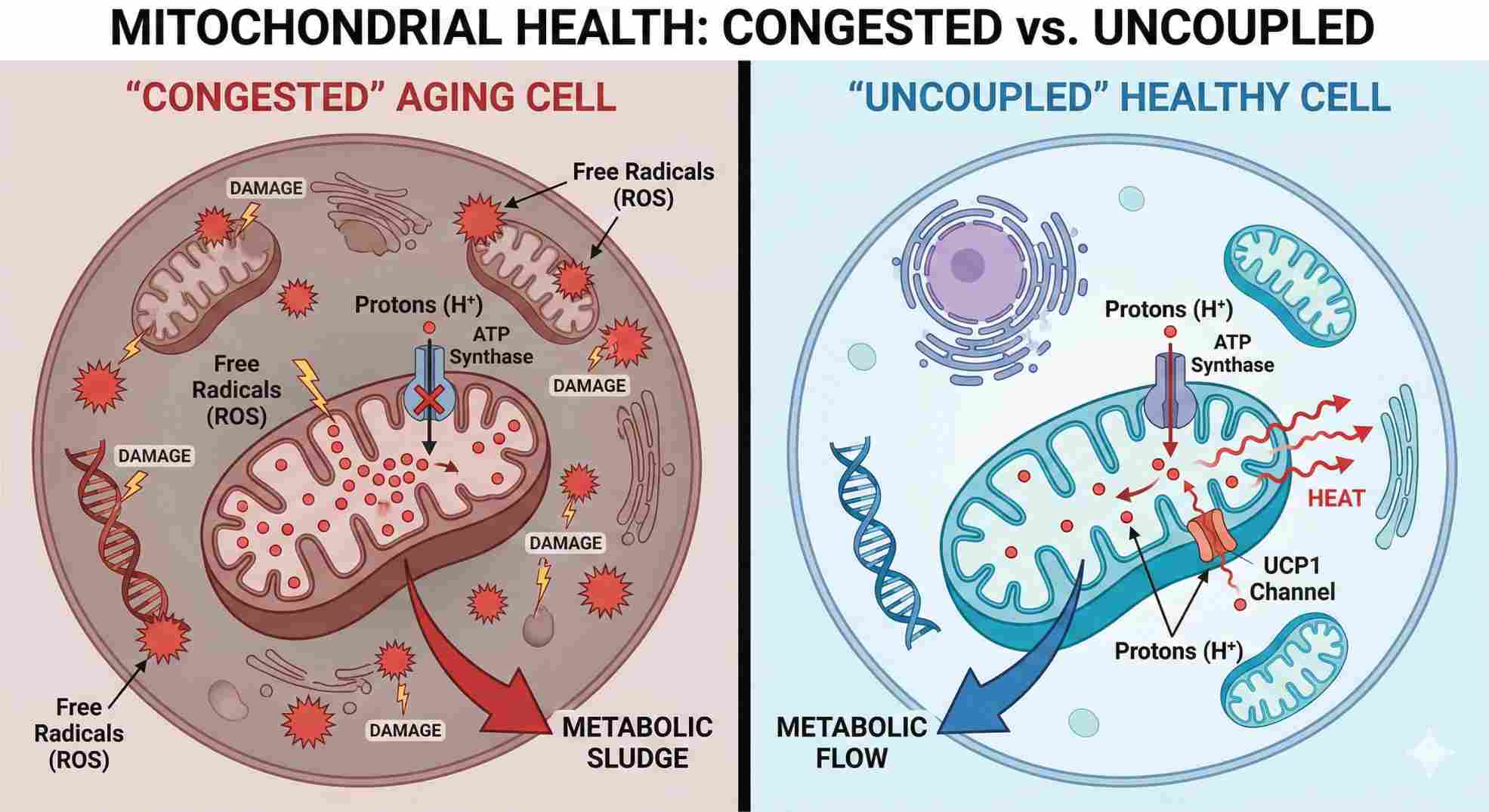
As we get older, our mitochondria tend to get sluggish. They stop uncoupling and start leaking “gunk” instead of heat. Controlled mitochondrial uncoupling is the opposite—it’s an organized way to keep the system moving.
Data from the biggest health journals shows that keeping this “leak” active prevents the metabolic sludge that causes brain fog and weight gain. If you keep the protons moving, the system stays young.
Conclusion: Stop Trying to be Perfect
Your health isn’t about being a perfectly efficient machine. It’s about being a resilient one. By leaning into things that feel a little uncomfortable—like a cold splash of water or some spicy peppers—you’re actually giving your cells the “pressure relief” they need to stay young.
Don’t overcomplicate it. Turn down the heat in your house, eat real food, and let your mitochondria do what they were evolved to do: burn bright.
Ready to see real changes in the mirror? Try Mitolyn risk-free for 90 days and lock in today’s special discount before it expires
Frequently Asked Questions:
Will this actually help me lose weight?
It’s not a magic pill, but it’s a massive help. By increasing the amount of energy you “waste” as heat, you raise your baseline metabolism. It’s like idling your car at a higher RPM.
Are there any side effects to uncoupling?
When done naturally through diet and cold, no. Your body has built-in brakes to make sure you don’t overdo it. Just don’t jump into an ice bath for an hour on day one!
Is coffee good for this?
Yes. The caffeine in your morning cup helps jumpstart the nervous system signals that tell your brown fat to get to work.
How soon will I see results?
You’ll feel the “heat” from spicy food or a cold shower immediately. The actual structural changes—like building more brown fat—usually take about three to four weeks of consistency.