

Have you ever stopped to think about what is actually happening inside your cells to keep you moving, thinking, and breathing? At the heart of every single action your body takes is mitochondrial metabolism, a complex set of processes that turns the food you eat and the air you breathe into life-sustaining energy. Without this internal engine humming along perfectly, your health begins to stall. You might feel it as a sudden afternoon slump, persistent brain fog, or a slow recovery after a long day. It is not just about feeling tired; it is about how your body functions at the most basic level. Research into these complex metabolic processes shows that when energy production fails, the entire system suffers.
It’s easy to get lost in the jargon of biology textbooks, but why does this matter to you right now? Because your metabolic health isn’t just a buzzword; it’s the literal foundation of your longevity. From the way your heart beats to how your muscles recover after a workout, everything relies on the efficiency of your mitochondria. When these powerhouses fail, the “check engine” light of your body starts flashing. We see this through weight gain, constant fatigue, and the early signs of chronic issues that most people just shrug off as part of the aging process. Your mitochondrial metabolism determines your biological age more than the date on your birth certificate.
In this guide, we are going to look into exactly how these cellular organelles work and how you can make them run better for improved performance. We will look at the pathways that create energy and, more importantly, how to protect your cells from damage. It’s time to move past the surface-level talk and look at the real science of bioenergetics. Understanding the rhythm of your cells is the first step to owning your health and feeling like yourself again. Mitochondrial metabolism is the silent force that dictates how you age and how you feel every single day.
The most important thing to grasp about your internal energy is that it isn’t a fixed setting. It is a dynamic system. A healthy cell is metabolically flexible. This means it can switch between burning glucose (carbs) and burning fats based on what is available. Many people lose this ability because of poor diet or lack of movement. They force their mitochondria to struggle with only one fuel source. Restoring metabolic flexibility is the fastest way to stabilize your daily energy levels and improve your overall mitochondrial metabolism. When you can switch fuels, you stop the energy crashes and start the healing process.
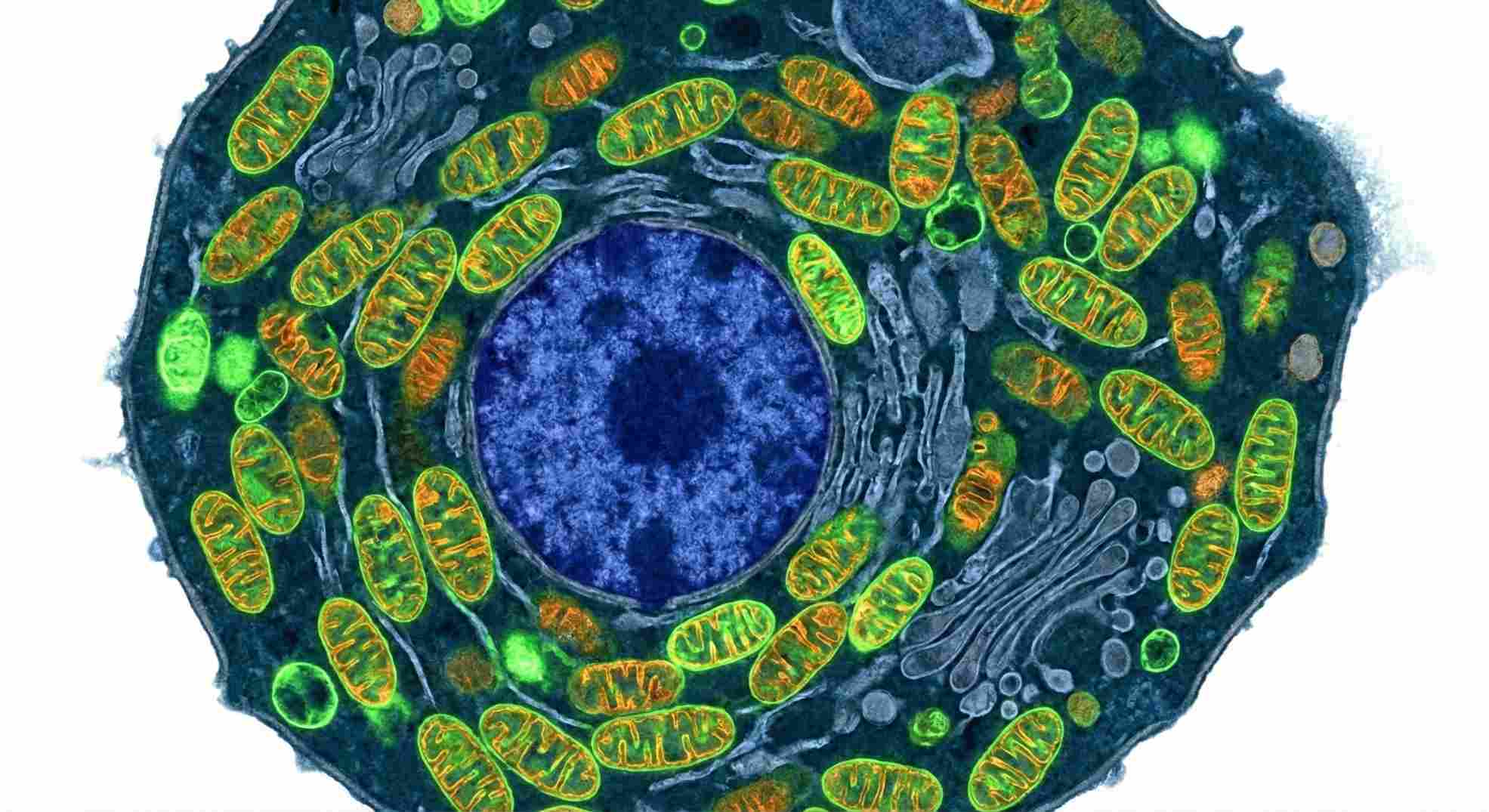
The Vital Role of Mitochondrial Metabolism in Longevity
Think of your body like a hybrid car. When you are doing low-intensity tasks, you should be running on the “battery” of your stored fat. When you need a burst of speed, you switch to “gas” or glucose. If your cell loses this ability, it becomes stuck. You start craving sugar constantly because your body has forgotten how to access its fat stores. This creates a cycle of inflammation and stress that wears down your cellular machinery over time. Fixing your mitochondrial metabolism means teaching your body how to be an efficient hybrid again.
This efficiency is what scientists call energy homeostasis. It is the balance between the energy you take in and the energy your cells use to maintain, repair, and protect themselves. When this balance is off, you don’t just feel slow; your cells actually start to accumulate damage. This damage affects your metabolic health at a systemic level, leading to issues with blood sugar, heart health, and even cognitive decline. By focusing on mitochondrial metabolism, you are addressing the root cause of why we get sick as we get older.
| Metabolic State | Primary Fuel Source | Cellular Impact |
|---|---|---|
| Metabolic Flexibility | Fats & Glucose | High resilience; efficient ATP production. |
| Metabolic Rigidity | Glucose Only | Energy crashes; insulin resistance. |
How Your Cells Generate Power
At its core, the primary job of mitochondria is the creation of adenosine triphosphate, or ATP. Think of ATP as the universal currency of the cell. If your body were a city, ATP would be the electricity running the lights, the water pumps, and the transit system. Without it, the city goes dark. Every muscle contraction, every beat of your heart, and every thought in your brain requires a “payment” of ATP. Your mitochondrial metabolism is the factory that mints this currency around the clock.
The Stages of Cellular Respiration
This energy production doesn’t happen in one big explosion. It is a carefully managed series of events known as cellular respiration. There are three main stages you need to know to understand mitochondrial metabolism:
- Glycolysis: This happens in the fluid of the cell, breaking down glucose into simpler parts. It doesn’t require oxygen, but it isn’t very efficient. It is the “quick and dirty” way to get energy.
- The Krebs Cycle (Citric Acid Cycle): This takes place deep inside the mitochondria to generate electron carriers like NADH. It is a spinning wheel of chemical reactions that strips energy from your food.
- The Electron Transport Chain (ETC): This is the final, high-output stage where the most ATP is made. This is where your mitochondrial metabolism reaches its peak efficiency.
The electron transport chain is where the real work happens. It uses oxygen to pull electrons through a series of proteins. This creates a flow that powers a tiny “turbine” inside the cell called ATP synthase. This process is called oxidative phosphorylation. It is the most efficient way your body produces energy. However, it requires a steady supply of nutrients and oxygen. If you aren’t breathing well or eating right, the turbine slows down, and your cellular energy drops.
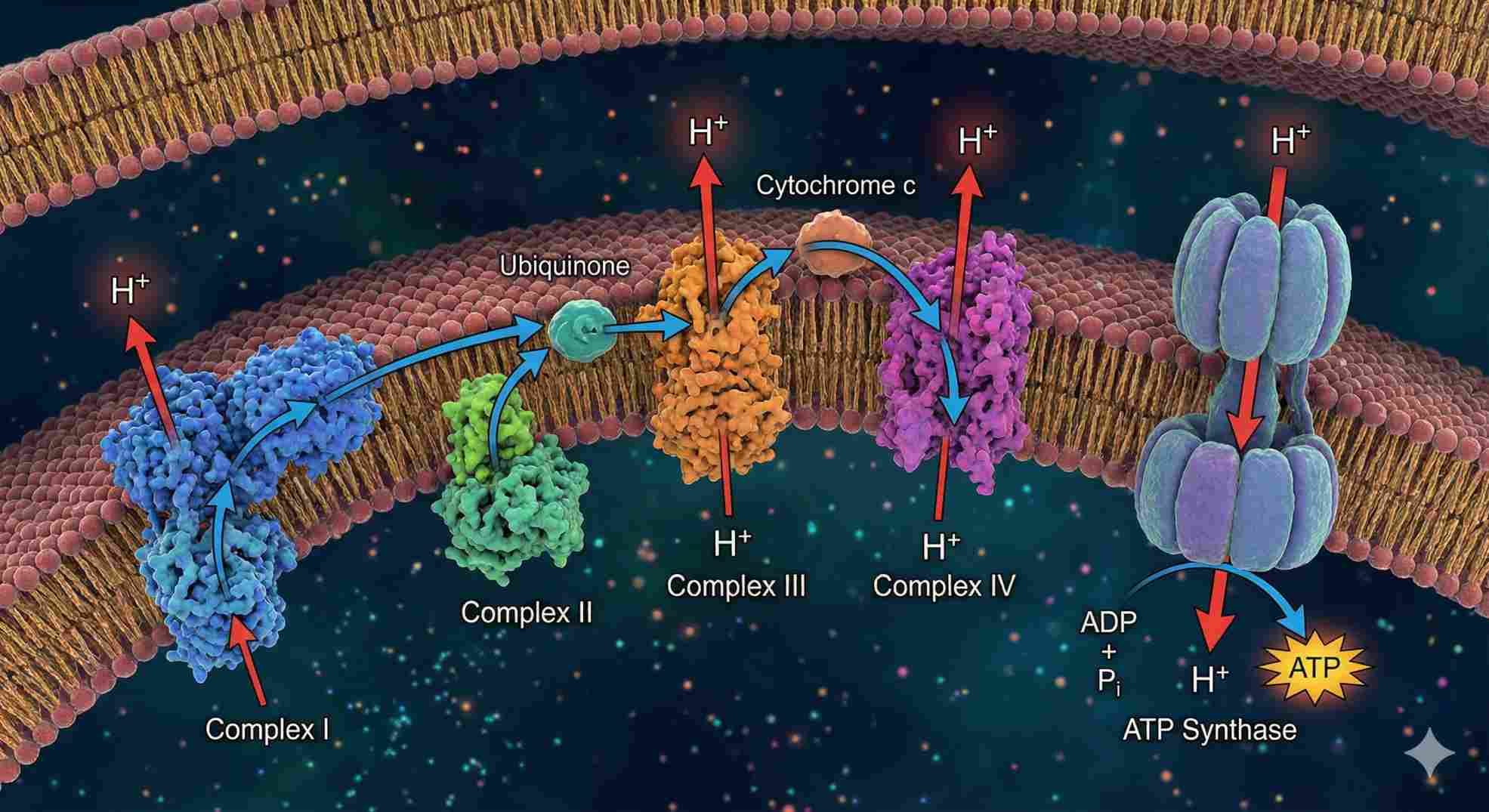
Beta-Oxidation: Burning Fat for Fuel
Your mitochondria are picky about how they burn fuel. Through fatty acid oxidation (also known as beta-oxidation), they break down fats into usable energy. This is a much “cleaner” and more abundant fuel source than glucose. But it requires healthy, functioning mitochondria to pull it off. When your glucose metabolism is constantly spiked by high-sugar diets, your mitochondria can become “clogged.” This leads to insulin resistance and a drop in overall mitochondrial metabolism efficiency.
| Feature | Glucose Metabolism | Fatty Acid (Beta) Oxidation |
|---|---|---|
| ATP Yield | Lower (approx. 30-32 ATP) | Much Higher (e.g., 106+ ATP) |
| Speed | Very Fast (Sprint fuel) | Slower (Endurance fuel) |
| Cleanliness | High ROS potential | Lower ROS relative to energy yield |
The Impact of Reactive Oxygen Species (ROS)
Nothing is free in biology. As a byproduct of producing energy, mitochondria create reactive oxygen species (ROS). In small amounts, ROS act as signaling molecules. They tell the cell to get stronger, much like how lifting weights tells a muscle to grow. However, when mitochondrial metabolism is stressed or inefficient, ROS levels skyrocket. This leads to oxidative stress, which is essentially internal “rusting.”
This stress can damage your mitochondrial DNA (mtDNA). Unlike the DNA in your cell’s nucleus, mtDNA is very fragile. It doesn’t have the same heavy-duty repair mechanisms. Over time, this damage leads to mitochondrial dysfunction. This is the root cause of many age-related issues, including heart disease and memory loss. When your mitochondrial metabolism is broken, you age faster on the inside, and your cells lose their ability to repair themselves.
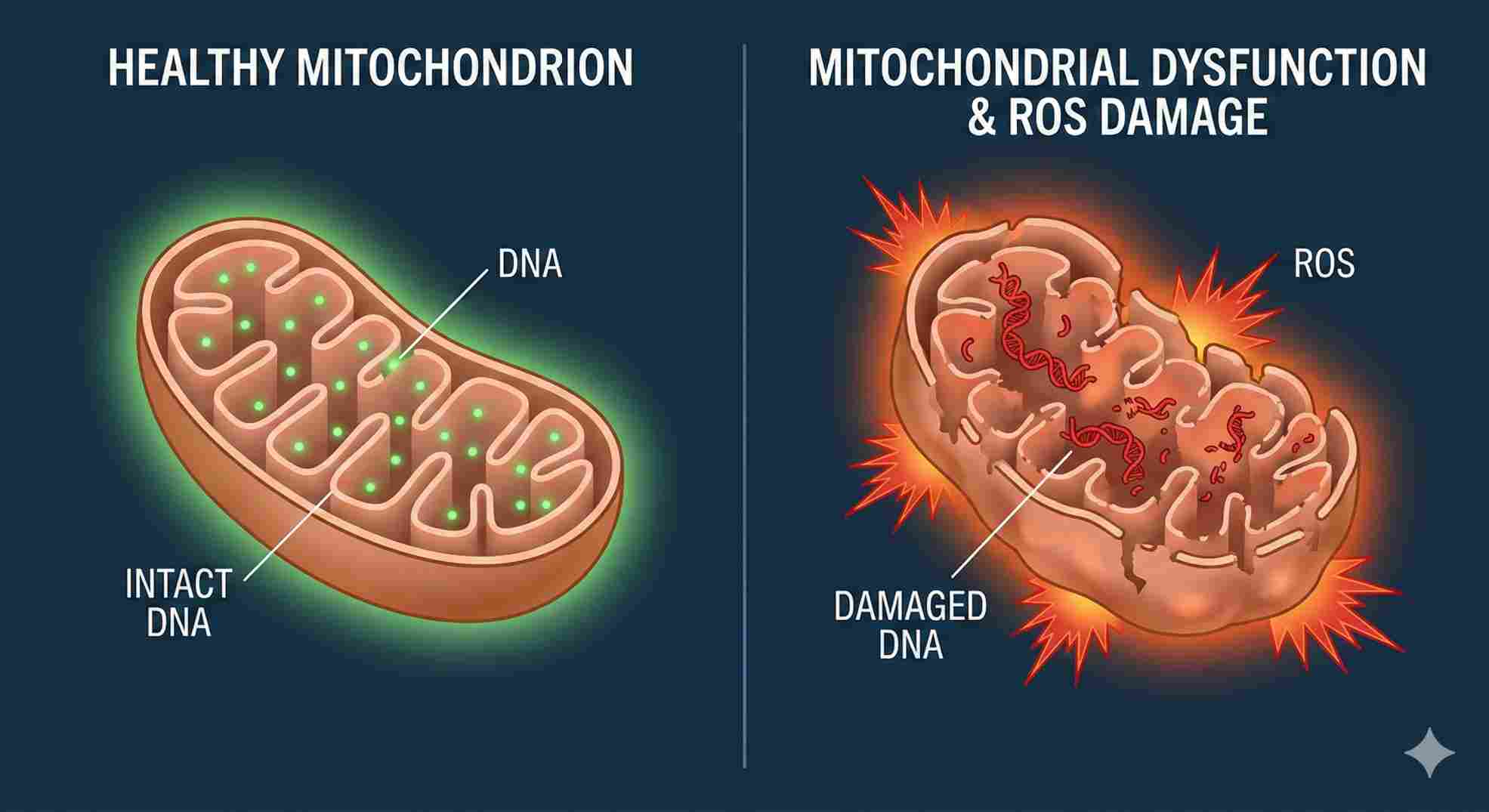
Key Nutrients for Mitochondrial Health
To keep the electron transport chain running smoothly, your body uses specific cofactors. Without these, your mitochondrial metabolism stalls, no matter how much you exercise or how well you eat. You need the right tools for the job. NAD+ is perhaps the most important molecule in this process. It carries electrons to the ETC. As we get older, our levels of NAD+ drop significantly. This slows down mitochondrial metabolism because the “delivery trucks” are missing.
Supporting your NAD+ levels through diet, exercise, and specific precursors can help keep your cellular engines running like they did in your youth. Additionally, Coenzyme Q10 (CoQ10) is another vital player. It acts as a shuttle, moving electrons between the proteins in the ETC. Without enough CoQ10, the chain breaks, and energy production stops. This is why people on certain medications, like statins, often feel muscle fatigue—their CoQ10 levels are depleted, which directly hurts their mitochondrial metabolism. Supplementing with a high-quality ubiquinol form of CoQ10 can often restore that lost energy.
For those looking to optimize their cellular pathways through specific support, you can search for Mitolyn Buy Online to find concentrated nutrients designed to aid these internal engines. Providing your body with the raw materials it needs is a huge part of maintaining bioenergetics. Beyond just vitamins, the quality of your metabolic pathways depends on these micronutrients being available when the cell calls for them.
| Nutrient | Role in Mitochondria | Common Sources |
|---|---|---|
| CoQ10 | Electron shuttle in ETC. | Organ meats, fatty fish, supplementation. |
| Magnesium | Binds to ATP for biological activity. | Leafy greens, nuts, seeds. |
| B Vitamins | Co-factors for the Krebs cycle. | Eggs, legumes, whole grains. |
Cleaning the Engine: Mitophagy and Biogenesis
Your body has built-in “quality control” systems to manage its power plants. We have to learn how to trigger these systems to stay sharp. One of these processes is called mitophagy. This is where your cells identify and “eat” damaged mitochondria. It’s a garbage collection service. It prevents broken power plants from leaking toxic waste (ROS) into the cell. If you don’t clear out the trash, the whole cell gets sick, and your mitochondrial metabolism becomes sluggish.
On the flip side, we have mitochondrial biogenesis. This is the creation of brand-new mitochondria. When you challenge your body—through exercise or cold exposure—you signal your cells to build more engines. More engines mean more cellular energy and better energy homeostasis. By constantly clearing out the old and building the new, you keep your mitochondrial metabolism at peak performance. Current research on mitophagy and biogenesis highlights these as critical pathways for preventing chronic disease.
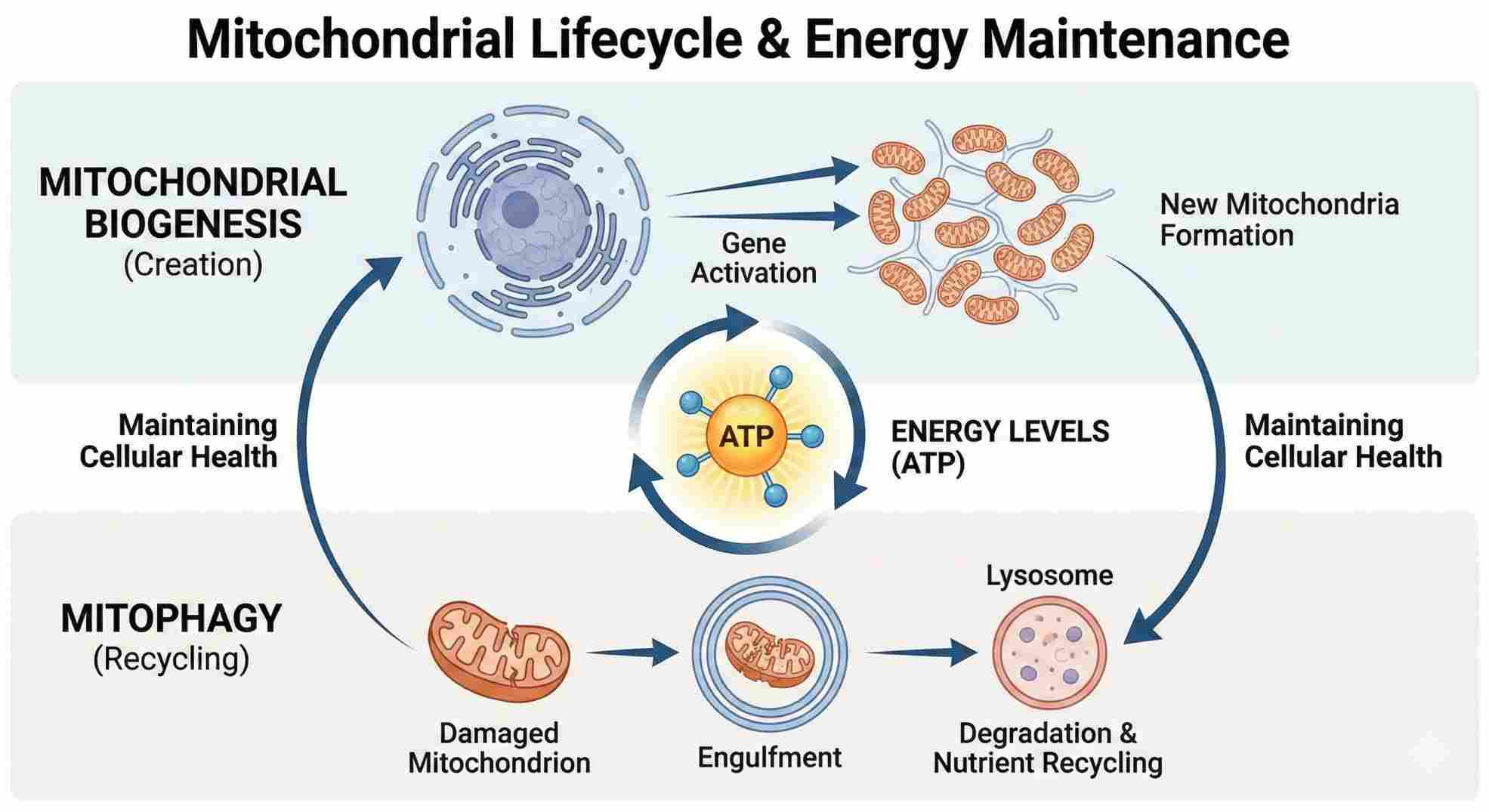 Understanding Mitochondrial Morphology
Mitochondria are not static “beans.” They are constantly changing shape, merging, and splitting. This is called mitochondrial morphology. It is a vital part of mitochondrial metabolism. Fusion helps maintain energy production during stress by sharing resources between mitochondria. Fission is necessary for cell division and removing dysfunctional parts through mitophagy.
A loss of balance between these two processes is a hallmark of poor metabolic health. If your mitochondria stay fragmented, they cannot produce energy efficiently. If they stay fused and never break apart, they can’t clear out the damage. A healthy mitochondrial metabolism requires a constant dance between the two. Lifestyle factors like chronic stress and high-sugar diets can disrupt this balance, leading to cellular decay and the rapid buildup of ROS.
Actionable Steps to Boost Your Mitochondrial Metabolism
You don’t need a PhD to start improving your mitochondrial metabolism. Small, consistent changes can yield massive results for your metabolic pathways. The goal is to provide the right nutrients while reducing the “noise” and stress that causes damage to your cells. Here are three things you can do starting today:
- Movement is Non-Negotiable: High-Intensity Interval Training (HIIT) is one of the best ways to trigger mitochondrial biogenesis. By pushing your cells to their limit, you force them to adapt. However, don’t overlook “Zone 2” training. This is steady activity like a brisk walk. It trains your cells to be better at fatty acid oxidation.
- Strategic Nutrition: To support your Krebs cycle, focus on magnesium. It is required for every single ATP reaction. If you are low on magnesium, your energy is “locked.” Also, consider intermittent fasting. This triggers mitophagy, giving your system a chance to reset and clear out the junk.
- Temperature Stress: Cold plunges or saunas create a healthy stress that forces your mitochondria to work harder to maintain your internal temperature. This strengthens the entire mitochondrial metabolism system and improves your resilience to other forms of stress.

The Connection to Modern Disease
If we look at the most common health problems today, a common thread emerges: the breakdown of mitochondrial metabolism. In neurodegenerative diseases, the brain cells simply run out of power. In heart disease, the heart muscle—which has the highest concentration of mitochondria—can no longer pump effectively. Even obesity is often a mitochondrial problem. If your cells can’t burn fat through beta-oxidation, they store it. By fixing the engine, we can often solve the symptoms that show up elsewhere in the body.
This shift in thinking—from treating symptoms to treating the energy source—is the future of health. We are entering an era where we can target mitochondrial metabolism directly. Researchers are looking at “mitochondrial transfers” and advanced supplements to turn back the clock on cellular aging. But while the technology is exciting, the basics still win. Protecting your mtDNA from excess ROS through a clean diet and regular movement remains the most effective strategy we have.
Wrapping Up: Own Your Energy
Understanding mitochondrial metabolism is the first step toward true health. We’ve covered how your cells create ATP, why metabolic flexibility is your secret weapon, and how to prevent the damage that leads to chronic fatigue. Your biology is built from the bottom up. When you support your mitochondria, you aren’t just “having more energy.” You are ensuring that every organ in your body has the power it needs to repair itself and function at its peak.
Start with the basics: move your body, eat for your cells, and give your system the rest it needs to clean itself out. Your mitochondrial metabolism is a reflection of how you treat your body over time. Consistent focus on your mitochondrial metabolism today ensures a more resilient, energetic, and vibrant tomorrow. It’s time to stop guessing and start fueling your cellular engines the right way.
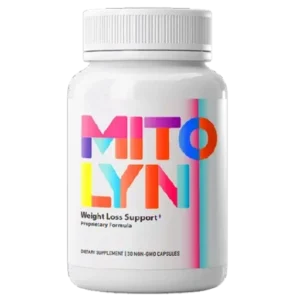
Ready to see real changes in the mirror? Try Mitolyn risk-free for 90 days and lock in today’s special discount before it expires
Frequently Asked Questions:
What are the symptoms of poor mitochondrial metabolism?
The most common sign is a deep, unshakeable fatigue that sleep doesn’t fix. This is often called cellular fatigue. Other red flags include persistent “brain fog,” muscle weakness during workouts, an inability to lose body fat despite dieting, and slow recovery from illness. If you feel like your “battery” is draining faster than it used to, it is likely a sign of mitochondrial dysfunction.
Can you actually repair damaged mitochondria?
Yes, absolutely. Your mitochondria are dynamic. You can trigger the repair process through mitophagy, which clears out the damaged parts. Simultaneously, you can stimulate mitochondrial biogenesis (the growth of new mitochondria) through exercise and cold exposure. You are not stuck with the mitochondria you have today; your lifestyle dictates their health.
Does the Keto diet improve mitochondrial function?
It can be a powerful tool. The Keto diet forces your body to use fatty acid oxidation instead of glucose, which creates a “cleaner” burn with fewer reactive oxygen species (ROS). However, the ultimate goal is metabolic flexibility—the ability to burn both fat and carbs efficiently—rather than being stuck in one mode forever.
How long do I need to fast to trigger mitophagy?
While it varies from person to person, research suggests that mitophagy generally begins to ramp up after 16 to 18 hours of fasting. This is when your insulin levels drop low enough for the body to switch from “growth mode” to “repair mode.” A 24-hour fast once a week is a common strategy to deep-clean your cellular energy systems.
What is the single best exercise for mitochondria?
You actually need two types. Zone 2 cardio (steady-state activity where you can still hold a conversation) increases the efficiency of your mitochondria. High-Intensity Interval Training (HIIT) increases the number of mitochondria you have (biogenesis). For optimal bioenergetics, a mix of both is superior to doing just one.