

When searching for the best multivitamin postmenopausal women can take, most don’t realize that sharing a standard bottle with their daughter could actually be dangerous.
It sounds dramatic, but here is the reality: Younger women are told to load up on iron to replace what they lose every month. But once you hit menopause, that monthly loss stops. If you keep pumping iron into your system when your body has no way to get rid of it, it doesn’t just disappear. It stays in your organs, builds up, and can eventually lead to iron toxicity.
Yet, you walk into the pharmacy and see shelves full of pink bottles just labeled “Women’s Health.” They rarely tell you that a 25-year-old and a 65-year-old have completely contradictory biological needs.
The rules have changed. You don’t need more of everything. You need a targeted approach. You need nutrients that specifically protect your bones as estrogen fades, support a brain that’s adapting to new chemical realities, and actively exclude ingredients that used to be helpful but are now harmful.
We aren’t just reading labels here. We are looking at what actually absorbs into your blood, what is verified by third parties, and what experts are actually prescribing.
The “Cheatsheet”
- Drop the Iron: Unless your doctor specifically prescribed it, go iron-free.
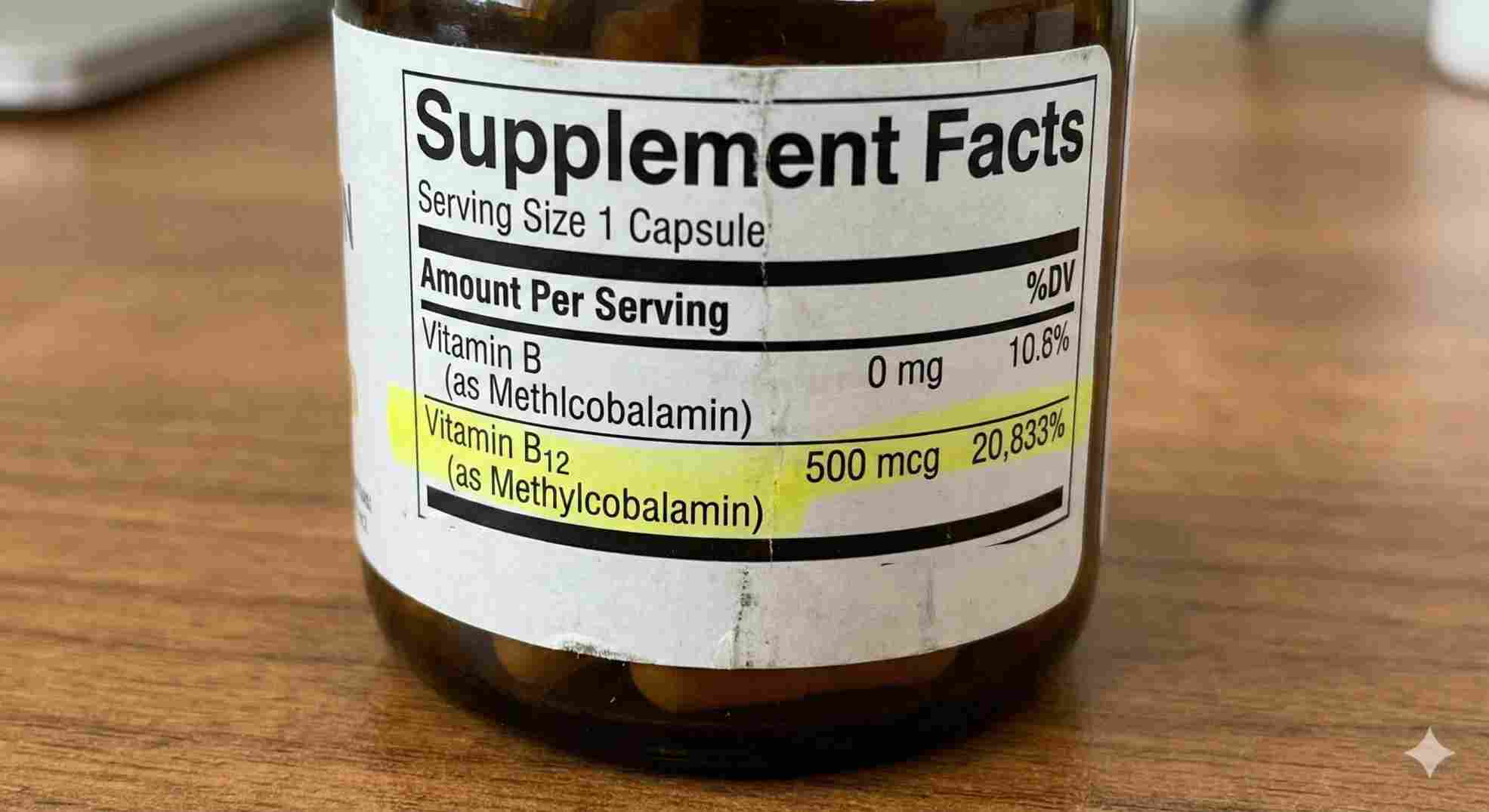
- Check the B12: If it says “Cyanocobalamin,” put it back. You want Methylated B12.
- The Bone Team: Calcium is useless without Vitamin D3. They need to be together.
- Trust but Verify: Look for USP or NSF seals. Otherwise, it’s just a mystery powder.
Why Your Body Needs a New Routine
When estrogen drops, it’s not just about hot flashes. It changes the way your entire system processes fuel.
1. Your Bones are Vulnerable
Estrogen was your bone guardian. Now that it’s gone, your body breaks down bone faster than it builds it. The best multivitamin for women over 50 menopause has to prioritize Calcium and Vitamin D3. According to the National Institute on Aging, the type matters significantly. Calcium Carbonate is basically chalk—it’s hard to digest. Look for Calcium Citrate or calcium from food sources.
2. Absorption Gets Harder
As we get older, our stomach acid gets weaker. You need that acid to strip Vitamin B12 from food. So, even if you eat plenty of meat, you might still be B12 deficient. A good supplement gives you B12 in a “free” form that slips right into your system without the fight.
3. The Iron Issue
We touched on this, but it’s worth repeating. High iron stores in older women are linked to faster cellular aging. This is a critical concept often discussed in our broader guide on Longevity Supplements: The Reality Behind the Hype, where minimizing oxidative stress is key. The best multivitamins for over 40 female (especially those in perimenopause) and over 50s should be low-iron or completely iron-free to avoid this aging acceleration.
The Top Picks: What to Buy
We looked at ingredients, how many pills you have to swallow, and purity testing to find the winners.
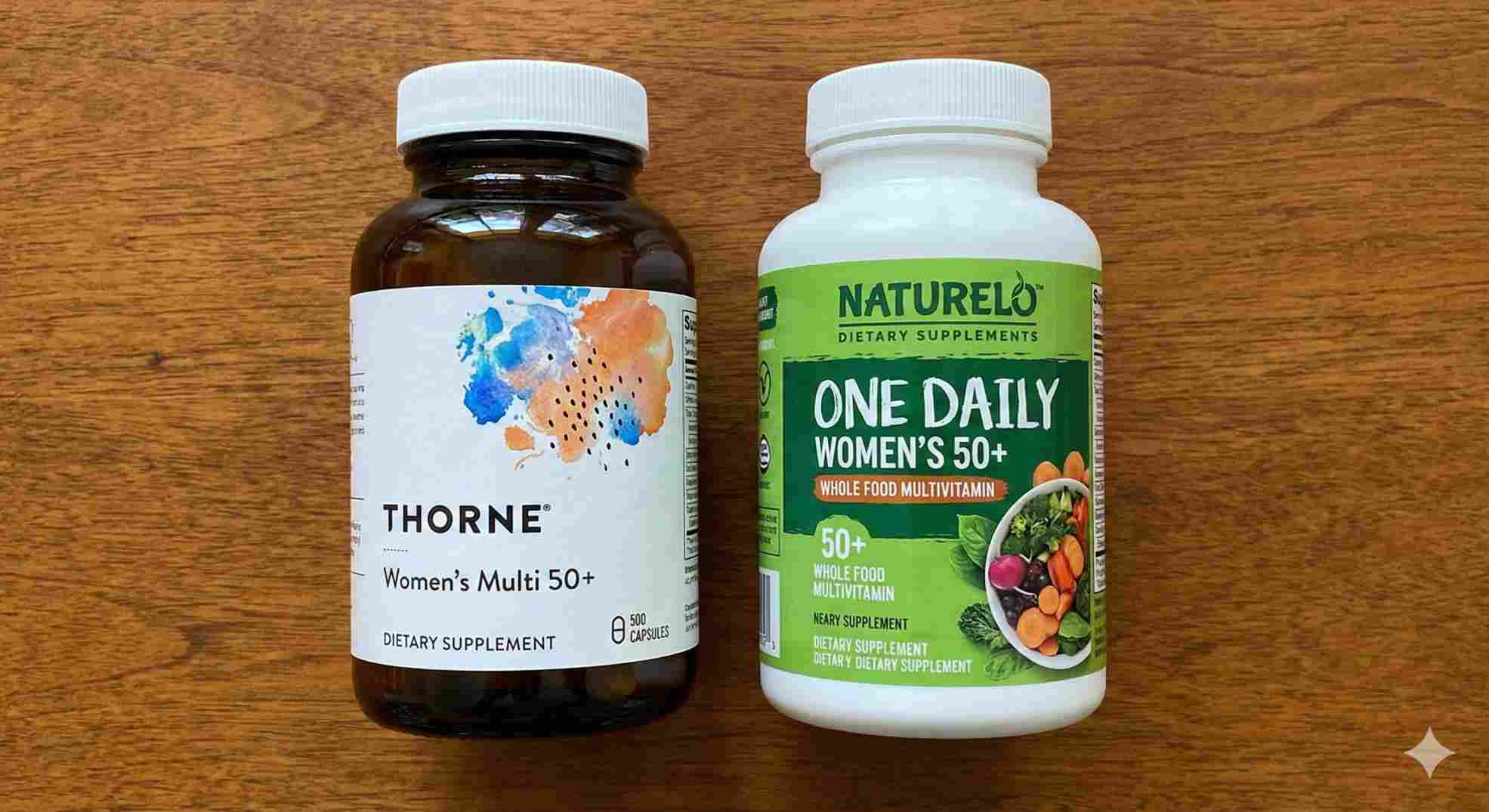
1. The Medical Grade Pick: Thorne Women’s Multi 50+
The Verdict: If you can afford it, buy this one. Thorne is the brand functional medicine doctors usually recommend because they don’t cut corners. Their “50+” formula is engineered without iron and uses the most absorbable versions of every nutrient (like 5-MTHF for folate).
- Why we like it: NSF Certified for Sport (that means rigorous purity testing), highly absorbable, no iron.
- The downside: It’s a commitment—up to 6 capsules a day.
- Who it’s for: Women who want the absolute best absorption and don’t mind taking a handful of pills.
2. The Natural Choice: Naturelo One Daily for Women 50+
The Verdict: The best balance of quality and ease. If you hate the idea of synthetic vitamins made in a lab, Naturelo is for you. They get their Vitamin D3 from wild-harvested lichen and calcium from marine algae. It feels more like food than medicine.
- Why we like it: Just 1 capsule a day, food-based ingredients, organic fruit blend, non-GMO.
- The downside: Lower calcium content than Thorne (you might need an extra calcium pill).
- Who it’s for: The best natural multivitamin for women over 50 who want a clean label.
3. The Budget Pick: Nature Made Multi For Her 50+
The Verdict: Safe, cheap, and gets the job done. You don’t have to spend a fortune to stay healthy. Nature Made is USP Verified. That means a non-profit tested it to prove it dissolves properly and actually contains what the label claims.
- Why we like it: Costs less than lunch (<$15), USP Verified, one tablet daily.
- The downside: Uses some synthetic forms (like Folic Acid) and has some fillers.
- Who it’s for: Consistency on a budget.
4. For People Who Hate Pills: SmartyPants Women’s Masters 50+
The Verdict: Tasty, but watch the sugar. If you simply cannot swallow capsules, these gummies are a great backup. They even manage to squeeze Omega-3s from fish oil in there.
- Why we like it: Easy to eat, includes Omega-3s.
- The downside: It has sugar, and gummies physically can’t hold as many minerals as pills.
- Who it’s for: Anyone who struggles with swallowing tablets.
Comparison: Postmenopausal vs. Pre-Menopausal
Here is why you need to switch bottles.
| Nutrient | Women Under 40 Needs | Postmenopausal (50+) Needs | Why the Change? |
|---|---|---|---|
| Iron | 18 mg/day | 8 mg/day (or less) | You aren’t losing blood monthly anymore. |
| Calcium | 1,000 mg/day | 1,200 mg/day | Without estrogen, bones need extra help. |
| Vitamin D | 600 IU | 800 – 1,000+ IU | Older skin isn’t as good at turning sunlight into Vitamin D. |
| Vitamin B6 | 1.3 mg/day | 1.5 mg/day | Vital for immunity and processing protein as we age. |
The Ingredient Checklist
Next time you are in the aisle, ignore the “Energy Boost” claims on the front. Flip the bottle over and look at the “Supplement Facts.”
The Good Stuff
- Methylcobalamin: This is active B12. If you see “Cyanocobalamin,” put it back. That’s the synthetic stuff your body has to work harder to use.
- Calcium Citrate: This absorbs better than Calcium Carbonate, especially if you take anything for heartburn.
- Vitamin K2: Cheap multis skip this. K2 is the traffic cop that tells Calcium to go to your bones, not your arteries.
The Red Flags
- Proprietary Blends: If a brand hides the amounts under a “Blend” or “Matrix” name, they are usually skimping on the good stuff and loading up on cheap fillers.
- Artificial Colors: Your vitamins don’t need to be bright red. Avoid Red #40 and Blue #2.
Can I Share With My Family?
We get this question a lot.
Scenario: Your college-aged daughter is home. Can she take your vitamins?
Answer: In a pinch, sure. But it’s not great for her. The best vitamins for college females are loaded with iron (18mg+) to help with menstruation and energy. If she takes your 50+ vitamin, she might feel run down. But definitely do not take hers.
Scenario: Can my husband take my multivitamin?
Answer: Actually, yes—sometimes. Men’s vitamins are usually iron-free too. Women’s formulas often add extra Calcium and Biotin which men might not care about, but it won’t hurt him.
Life Stage Quick Guide
| Feature | College/Young Adult | Perimenopause (40s) | Postmenopause (50+) |
|---|---|---|---|
| Main Goal | Reproductive health, Energy | Hormone balance, Stress prep | Bone strength, Heart health |
| Key Nutrient | Iron & Folic Acid | Magnesium & B-Complex | Calcium, D3, K2 |
| Iron Needs | High | Moderate/Variable | Low/None |
| Best Bet | Ritual 18+ / Garden of Life Her | Best multivitamins for over 40 female | Thorne 50+ / Naturelo 50+ |
The Bottom Line
Supplements can be confusing, but the science for postmenopausal women is actually pretty simple: Cut the Iron, Boost the Bone Support, and Check the Purity.
If you want the easy answer for the best multivitamin postmenopausal women can take, grab Naturelo One Daily Women’s 50+. It’s clean, easy to take, and effective. If you want the medical-grade option, go with Thorne.
Don’t wait for a bone density scan to tell you that you’re deficient. Start protecting your future today.
Ready to see real changes in the mirror? Try Mitolyn risk-free for 90 days and lock in today’s special discount before it expires
Frequently Asked Questions:
Is a multivitamin better than individual pills?
Think of a multivitamin as an insurance policy—it covers the basics. But for big issues like osteoporosis, a multivitamin won’t have enough Calcium (those pills are huge). In that case, take a good multi plus a separate Calcium/D3 supplement.
Does the FDA approve these?
No. The FDA treats supplements like food. They don’t check them for safety before they hit the shelves. That is why buying from brands with USP or NSF certification is the only way to know you’re safe.
When should I take it?
Take it with your biggest meal, ideally one with some fat (like avocado, eggs, or olive oil). Vitamins A, D, E, and K are “fat-soluble.” If you take them with black coffee on an empty stomach, you aren’t absorbing them.
I’m over 60, do I need a “Senior” vitamin?
Yes. “Senior” or “50+” isn’t just marketing. It usually means they took out the iron and bumped up the B12, which is exactly what your body needs.
Will this stop hot flashes?
Probably not. Multivitamins fix nutrient gaps. For hot flashes or night sweats, you might need something like Black Cohosh or Soy Isoflavones, but always ask your doctor first since those mess with hormones.